
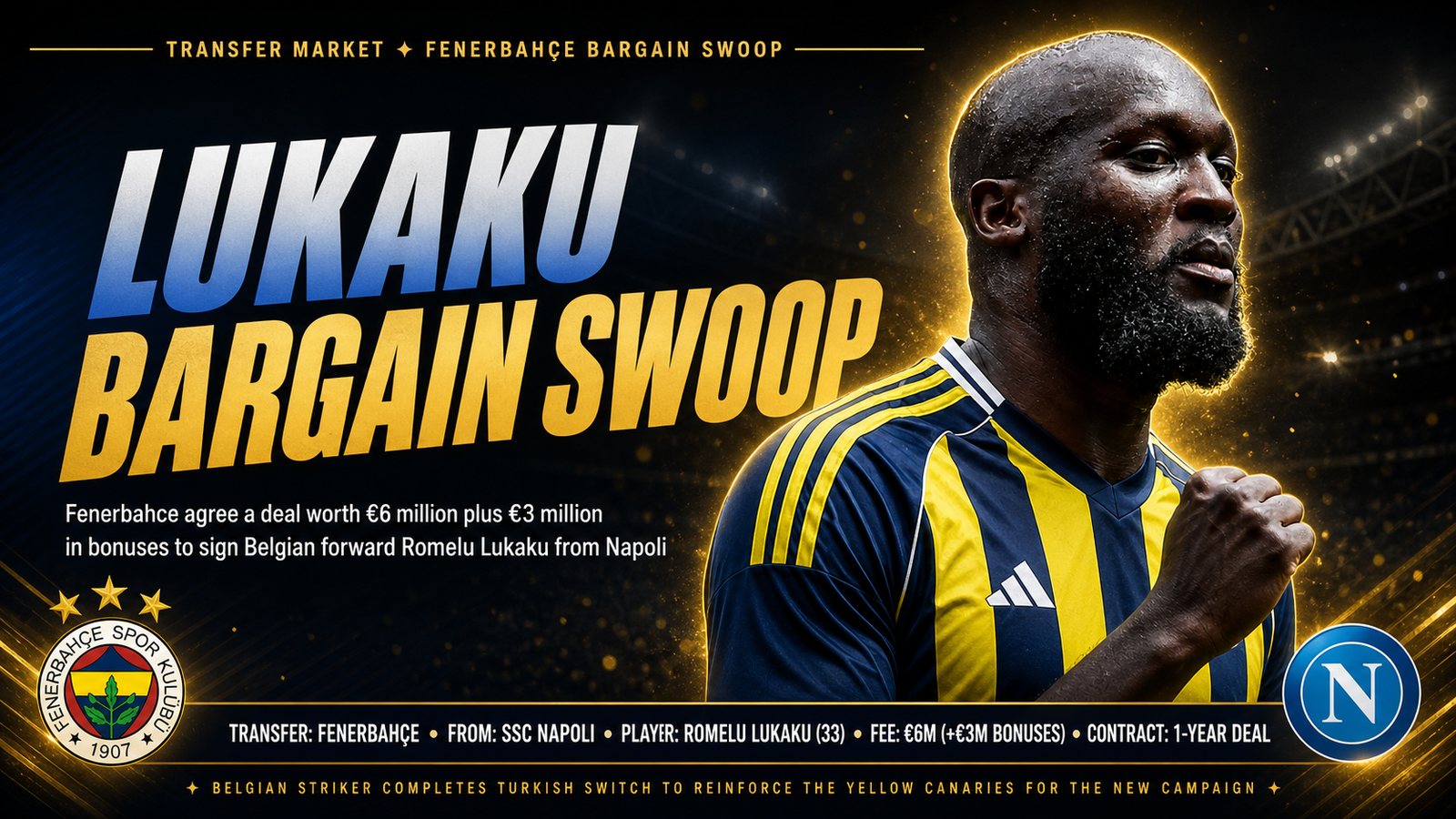
Turkish football’s summer spending spree keeps rolling. Just as we covered Mohamed Salah’s move to Trabzonspor and Dusan Vlahovic’s talks with Besiktas, now it’s Fenerbahce landing a genuine World Cup name — Romelu Lukaku — for a fee that will raise eyebrows across Europe.
What Happened
Fenerbahce have agreed a deal worth just €6 million plus up to €3 million in bonuses to sign Lukaku from Napoli, according to multiple reports including Fabrizio Romano and Gianluca Di Marzio. The Belgian striker has already completed his medical, and paperwork was being finalized as of Tuesday, with further intensive medical tests scheduled for Wednesday before he flies to Istanbul. He’ll sign a one-year deal with an option for a second, reportedly earning €10 million a season. Napoli originally wanted closer to €10 million for the sale, before settling for the lower figure.
Here’s the Debate
Napoli paid Chelsea around €30 million for Lukaku just two years ago. Selling him for €6 million — a fifth of that fee — after he helped them win a Scudetto is a genuinely dramatic drop in valuation. Is this simply what happens to a 33-year-old striker whose contract was entering its final year, or does it say something more concerning about how quickly his stock has fallen since the World Cup, where he scored for Belgium against the USA just five weeks ago? A player scoring at a World Cup and being sold for buttons within two months is the kind of contrast that should make anyone pause before assuming either number tells the full story.
There’s also a sharper football question here: Lukaku’s playing time was squeezed by Napoli’s signing of Rasmus Hojlund last summer. Is letting your title-winning striker leave for a cut-price fee smart squad management, prioritizing a younger option, or does it risk looking like Napoli undervalued a player who still delivered when it mattered most?
The Money Trail Worth Knowing
Here’s a detail your readers will want to see: because Chelsea sold Lukaku to Napoli in 2024, they’re contractually entitled to 40% of this new transfer fee. That means Chelsea profits from a player they let go years ago, off the back of a deal that barely benefits Napoli at all. Is that just how modern sell-on clauses work, or does it highlight how selling clubs can end up structurally disadvantaged in transfers like this?
Why Fenerbahce Are Doing This
This is Fenerbahce’s second major striker addition of the summer, following the €15 million return of Kosovo international Vedat Muriqi from Mallorca. Combined with the wider trend of Salah and potentially Vlahovic joining Turkish clubs this summer, there’s a genuine story here about the Süper Lig positioning itself as a legitimate landing spot for aging-but-proven European stars, rather than a retirement league.
What to Watch For
Whether Lukaku can rediscover consistent goalscoring form in a new league at 33, and whether Fenerbahce’s striker-heavy summer translates into a genuine Süper Lig title challenge. For Napoli, attention turns to how they reshape their attack around Hojlund for the season ahead.